YouTube's Pivot Teardown: How an Empty Dating Site Became 'Any Video'
YouTube began as a video dating site that could not get one upload, even when the founders offered cash. This startup teardown shows what the pivot changed, what the founders knew then, and a supply ask test you can run this week.
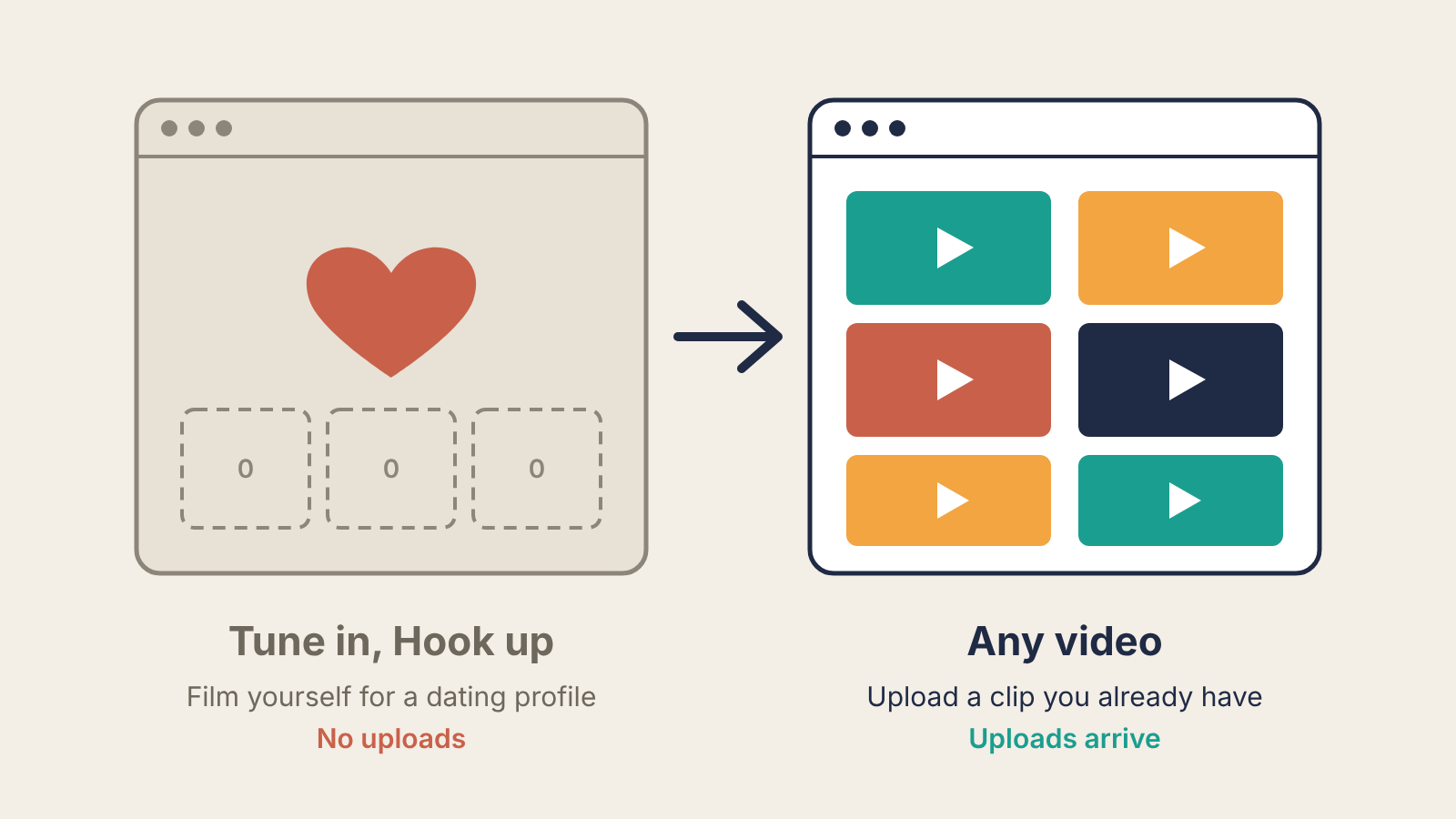
YouTube's first product was a video dating site, and nobody used it. Within days of the founders putting it up in early 2005, the site had no dating profiles at all. What rescued it was not a new feature but a wider question: instead of asking people to film themselves for strangers, the founders let them upload any video they already had. Google announced it would buy the company about twenty months later. This startup teardown separates the public record from the legend, then turns the pivot into a supply test you can run this week.
The sources are Vice's history of YouTube's dating-site origins, which draws on Jawed Karim's 2007 University of Illinois commencement speech, Tubefilter's report on Steve Chen's 2016 SXSW talk, and Google's acquisition press release as filed with the SEC. All of the early detail comes from founders looking back years later, and they do not agree on everything, so read this as one case retold, not a measured experiment.
What the first YouTube was
YouTube was started by Chad Hurley, Steve Chen and Jawed Karim. The first concept was dating: singles would upload a video of themselves describing who they were and who they wanted to meet, and others would browse and match. Karim later recalled, as Vice reports, "We even had a slogan for it: Tune in, Hook up."
The site needed one thing before it could be useful to anyone: people willing to film themselves and put that video in front of strangers. That is a demanding ask in any year. In 2005 most people had no easy way to record and upload video at all.
The signal
The signal was an empty site. In the founders' retelling, as Vice recounts it, five days in, not one dating video had been uploaded. Speaking at SXSW in 2016, Chen described the founders offering women $20 to upload a video of themselves, and still getting no takers.
Read that carefully, because it is a sharper signal than "no traction". The team did not lack visitors to convert; they could not get supply at any price they were willing to pay. Paying people to create content and still getting none tells you the ask itself is the problem. A better landing page or more traffic would not have fixed it.
Chen's summary of what came next, in Tubefilter's account: "OK, forget the dating aspect, let's just open it up to any video."
The change
The change was a change to the supply question. "Film yourself for a dating site" became "upload a video you want to share". The second ask reaches far more people, because it lets anyone who already has a clip contribute, without the embarrassment and effort of recording a personal pitch.
Everything else about the core product could stay: upload, host, play in a browser, share a link. The dating layer was a filter on top of that machinery, and it was the filter that was failing.
By the time Google announced the deal on 9 October 2006, a $1.65 billion stock-for-stock acquisition, the release said YouTube was serving more than 100 million video views a day with 65,000 new videos uploaded daily. Those are the company's own figures at the time of a sale, not audited usage data, but they show how far the wider supply question went.
What they knew then versus what we know now
The clean version of this story says the founders saw the light and pivoted. The public record is messier. Chen and Karim have told the founding story differently over the years, and the versions do not line up on every detail. Exactly when the dating idea was dropped, and how deliberate it was, depends on who you ask.
What the founders knew in early 2005: they had a working way to upload and play video in a browser, and the specific use they had built it for drew no supply, even when they offered cash. What they did not know: that online video was about to grow so fast, or that general uploads would work at the scale they did. Plenty of "open it up to everything" pivots produce a vague product with no reason to exist.
What can be borrowed is the diagnosis. When supply does not show up, the founders asked whether the constraint was the audience or the ask, and changed the ask. The Instagram pivot went the other way, cutting an app down to the one thing users already did, and Airbnb had the opposite problem to YouTube's, plenty of supply but few bookings, which its founders traced to bad listing photos. All three moves start from the same place: look at what people will actually do, not at the plan.
What to borrow: the supply ask test
If your product needs users to create something (listings, videos, reviews, answers, templates), your fit depends first on how many visitors will supply it. Measure that directly, and test the ask before you test anything else.
The formula.
supply rate = visitors who completed one contribution ÷ visitors who saw the contribution prompt
Count a contribution only when it is complete and visible to others. A started upload that never finishes is not supply.
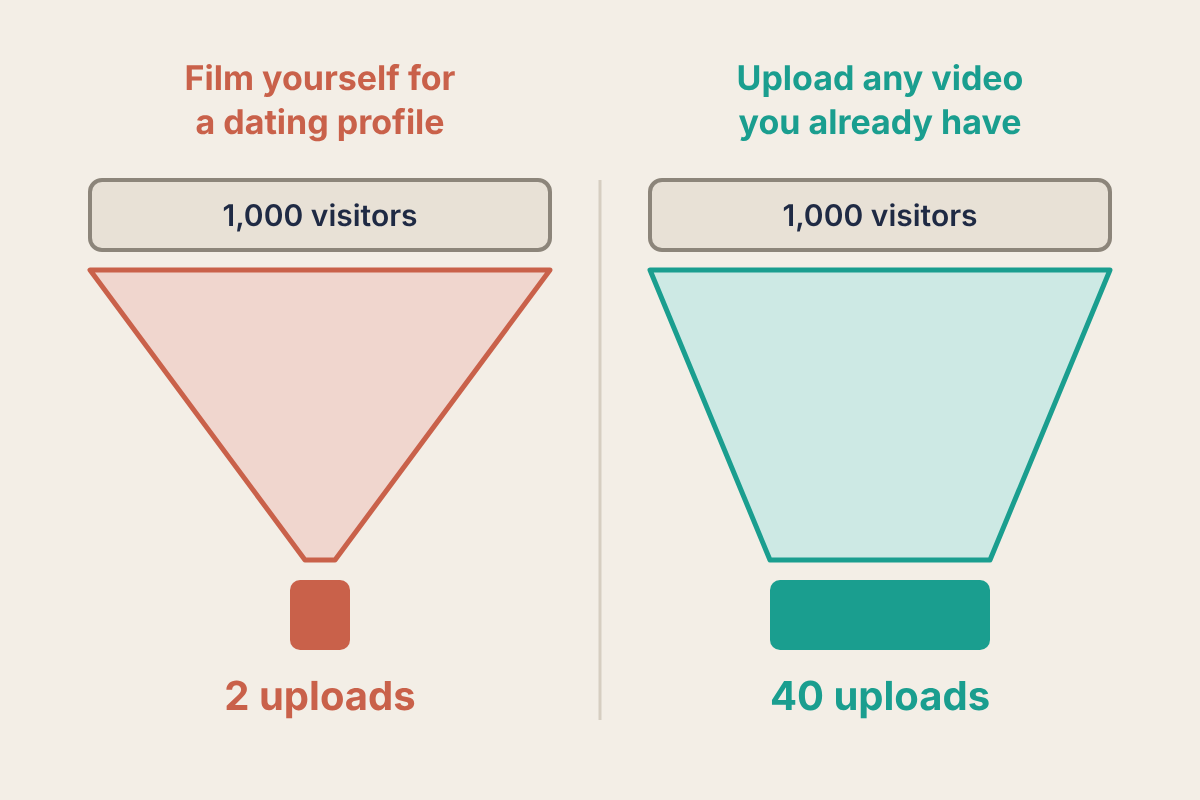
A worked example. These numbers are illustrative, not YouTube's. You send 1,000 visitors to a page that asks them to record a 60-second video introducing themselves. Two finish. Supply rate: 2 ÷ 1,000 = 0.2%.
You change only the ask. The next 1,000 visitors, from the same source, see "upload a video you already have and want to share". Forty finish. Supply rate: 40 ÷ 1,000 = 4%, twenty times the first.
Now check what that wider supply is worth. If 25 of those 40 uploaders come back and upload again within 14 days, your repeat supply rate is 25 ÷ 40 = 62.5%. If only 3 do, you have a one-off novelty, and the wider ask has not found fit either.
How to run it this week.
- Write two or three versions of the contribution ask, each lowering a different barrier: effort (use what you already have), exposure (share privately first), or skill (start from a template).
- Split traffic from one source evenly across them. Keep everything else on the page identical.
- Run until each version has at least 500 visitors who saw the prompt. Below that, a handful of uploads can swing the rate by a lot.
- Read both the supply rate and the 14-day repeat rate. Judge on the second.
The threshold to watch. If no ask gets above 1% supply rate from warm traffic, the product is asking for something people do not want to give, more traffic will not fix it, and it is time for a pivot-or-persevere decision. If one ask clears 3% and holds a repeat rate above 30%, build around that ask. These thresholds are our rule of thumb, not a published benchmark; use them to decide what to test next, not as proof of fit. A landing page smoke test is a cheap way to get the traffic.
YouTube's founders paid for supply and got none. That told them more than any amount of traffic would have.
