Dropbox's Demo Video Teardown: Testing Demand Before the Product Was Ready
A startup teardown of how Dropbox used a rough screencast to find early users: the sceptical Hacker News thread, the Digg video that took the waiting list to 75,000 in a day, what that did and did not prove, and how to run the test yourself.
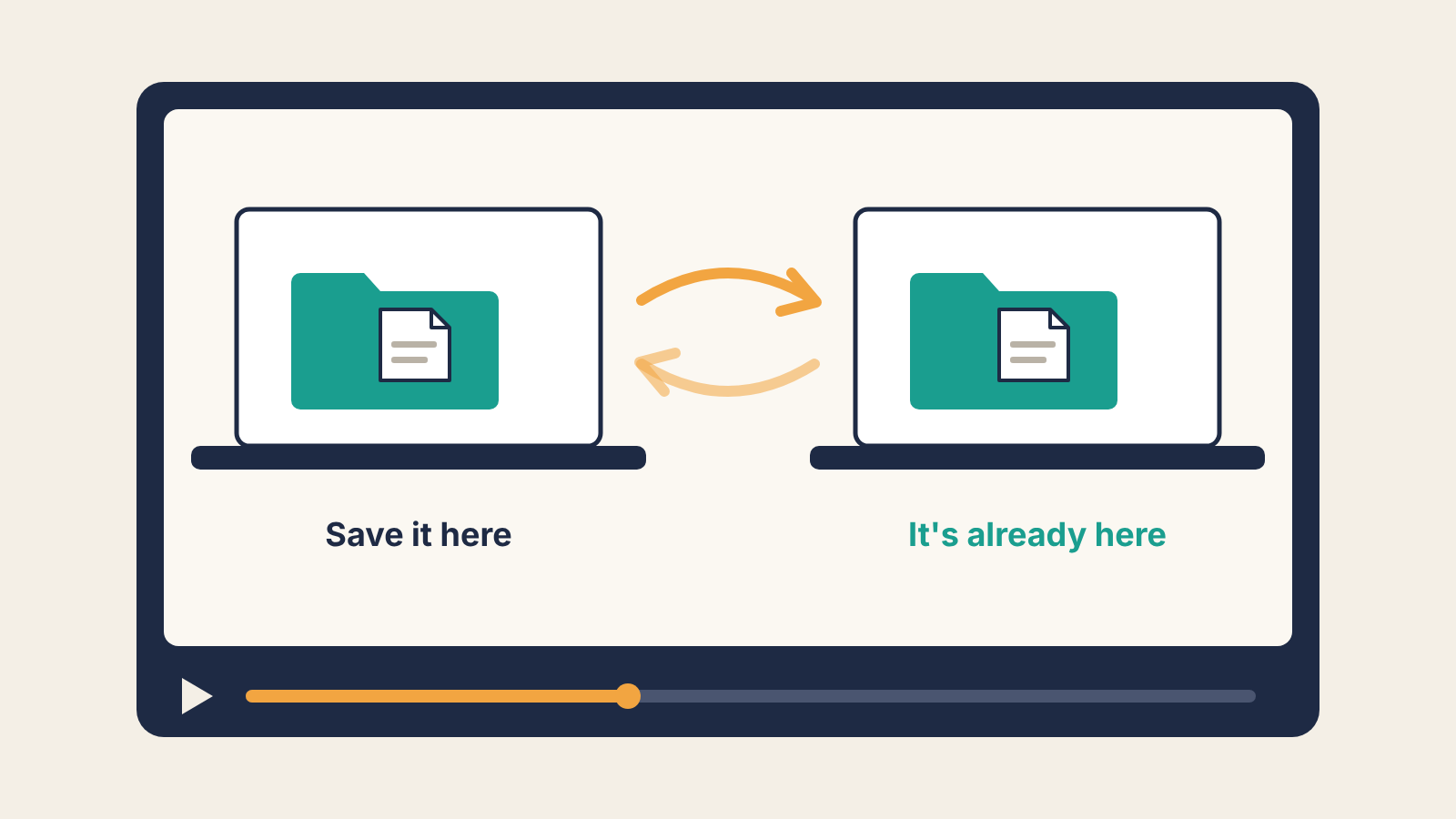
Dropbox tested demand before most people could use the product. Drew Houston recorded a short screencast of files syncing between computers, posted it to the communities he wanted as early users, and watched the beta waiting list. The second video, posted to Digg during the private beta, took the list to 75,000 people within 24 hours when the team had expected 15,000 at most, according to Houston's account to TechCrunch. This startup teardown looks at why a video was the right test for this product, what the sign-ups did and did not prove, and how to run the same kind of test on your own early users with numbers you can judge.
The sources are the original Hacker News thread from April 2007, the TechCrunch interview above, and the Wikipedia timeline of Dropbox. The founder's telling comes years after the fact and after a big success, so read it as one well-documented case.
The problem a landing page could not show
File sync is hard to sell in words. In 2007, "your files on every computer" sounded like a dozen products that already existed: FTP accounts, network drives, email to yourself, USB sticks. The difference Dropbox offered was in the experience: save a file in an ordinary folder and it simply shows up on your other machine, with no step in between. A landing page describing that reads like every other storage product. A video of it happening does not.
It was also expensive to build properly. Sync has to work across operating systems, handle conflicts and never lose a file. That combination, hard to explain and costly to finish, is exactly where a demand test before the build pays off.
The first signal: a hard crowd on Hacker News
On 4 April 2007, Houston posted "My YC app: Dropbox - Throw away your USB drive" to Hacker News, linking to the product and a rough screencast, as part of his application to Y Combinator. The thread is still up. The first reply argued that a Linux user could build the same thing "quite trivially" with an FTP account mounted locally through curlftpfs. Another said it did not really replace a USB drive.
Houston's reply is the useful part. He explained that Dropbox used a local folder with sync running in the background, and that it would be freemium: some storage free, paid tiers above that. He did not argue that the critics were wrong about what was possible. He clarified who it was for and how it would make money.
The lesson founders take from this thread is usually "ignore the sceptics". The better one is narrower. The people who could build it themselves were not the market. Their objection told Houston what to say to everyone else: no setup, no commands, it just works.
The second video: matching the pitch to the audience
About a year later, during the private beta, Dropbox posted a second video, this time on Digg. Houston told TechCrunch he layered in Easter eggs and references aimed at the Digg audience, the kind of in-jokes that made the video feel like it was made by one of them. The waiting list jumped to 75,000 in a day.
Later retellings, including Wikipedia's timeline, put the list at about 5,000 before the video. We could not trace that starting figure to a primary source, so treat the size of the jump as approximate. The 75,000 and the expectation of 15,000 come from Houston himself.
Then came the part that is easy to skip in the retelling. Dropbox did not let 75,000 people in. It ran what Houston called "a Gmail style closed beta", inviting people in batches. That kept the load manageable on a product that could not yet afford to lose anyone's files, and it meant each batch was a fresh group to watch.
What the sign-ups proved, and what they did not
A waiting list measures one thing: how many people want the outcome you showed them, enough to hand over an email address. That is real information. It told Dropbox the problem was widespread and the pitch worked on a mainstream tech audience, not only on engineers.
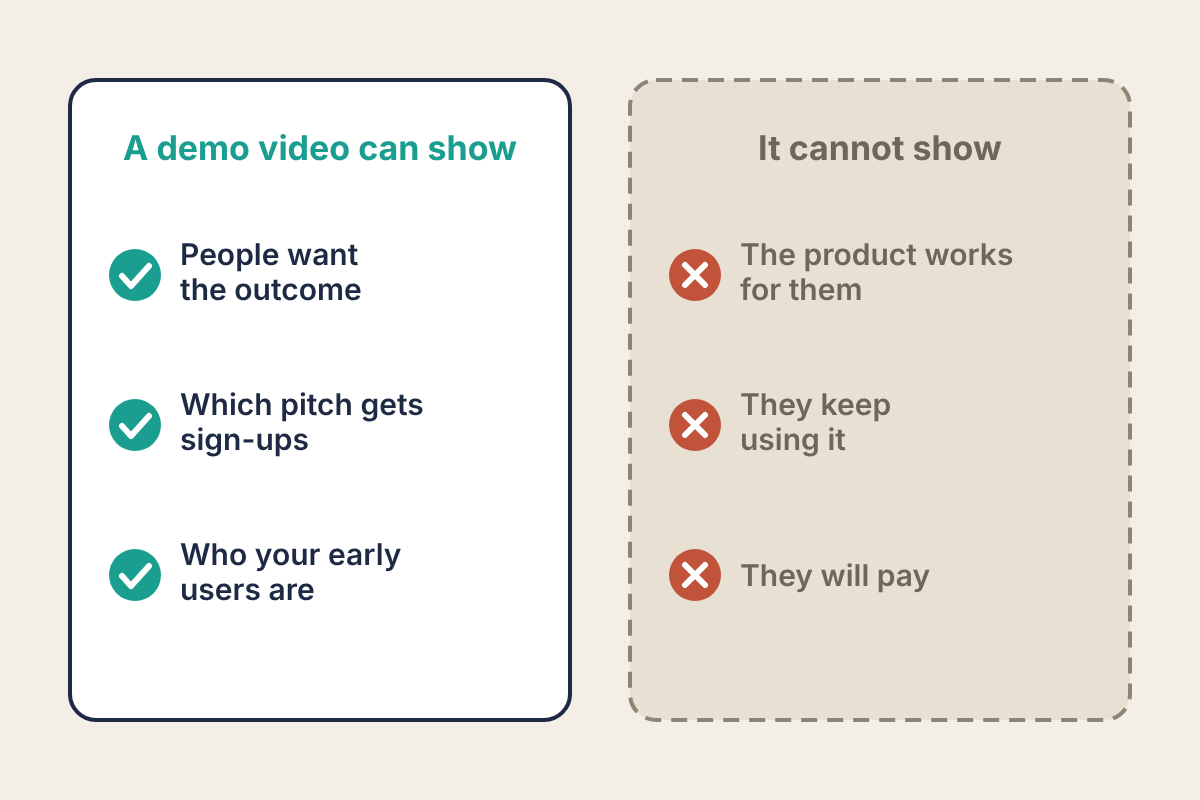
It could not prove the right-hand column. Whether people would keep using Dropbox depended on the sync actually working, every day, for months. Whether they would pay depended on the free tier running out at the right moment, and whether paying customers spent more over time is what net revenue retention measures. Those answers came from the closed beta and later from the shape of the retention curve, not from the video. A founder who reads 75,000 sign-ups as product-market fit has confused interest with need.
What the team knew then versus what we know now
In 2007 and 2008, Houston knew that technical users found the idea obvious, that a video made the difference visible, and that a large crowd would sign up after seeing it. He did not know whether the people on the list would stay once let in, or how many would pay.
What we know now, that Dropbox went on to become a large public company, makes the video look like a stroke of genius. It was a cheap test with a clear readout, run on a product whose value was visual. It would have told the team just as clearly if nobody cared. That is the part to copy.
Worked example: reading your own demo-video test
Say you post a 90-second demo to two communities where your target users gather. Set the threshold before you post. These are illustrative numbers, not Dropbox's:
| Community | Video views | Waitlist sign-ups | Conversion |
|---|---|---|---|
| Community A | 4,000 | 260 | 260 / 4,000 = 6.5% |
| Community B | 6,500 | 130 | 130 / 6,500 = 2.0% |
| Total | 10,500 | 390 | 390 / 10,500 = 3.7% |
The formula: conversion = sign-ups ÷ people who watched. Use views of the video, not page visits, if your host reports them, because people who never pressed play have not seen the pitch.
Community A converts more than three times better. That tells you where your early users are and which framing lands, which is the real result of the test. The overall 3.7% matters less than the gap between groups.
Two cautions. Views counted by a video host are loose, so compare communities measured the same way rather than against someone else's benchmark. And the sign-up is the cheapest commitment a person can make. Before you count it as demand, email the list a week later and ask one question about the last time they had the problem. The share who reply is a better sign of need than the sign-up itself. Stronger still is delivering the outcome by hand to a few of them for a fee and seeing who comes back.
What to borrow this week
- Write the one sentence your product changes for someone, as something they would see: "the file is already on the other computer". If you cannot film it, you are not ready for this test.
- Record a demo of 60 to 120 seconds that shows that moment. A rough screencast or a prototype is fine; say plainly if parts are not built yet.
- Pick two or three communities where your target users already talk, and adapt the opening of the post and the video to each, as Dropbox did for Digg. Follow each community's rules on self-promotion.
- Decide your threshold before posting, for example 3% of viewers joining the list in one community.
- Invite the list in batches of 20 to 50. Watch whether each batch is still using the product after two weeks before you invite the next.
Slack ran a similar gated rollout, letting in ever-bigger friendly teams before its public preview. Both cases make the same point: the sign-up count tells you to start, and the batches tell you whether to keep going. For the survey that tells you when the batches have turned into fans, see how Superhuman measured fit.
